Explore the exciting elements of Star Wars: Galactic Racer, including its branching campaign, diverse vehicles, and multiplayer features set to launch on October 6th.
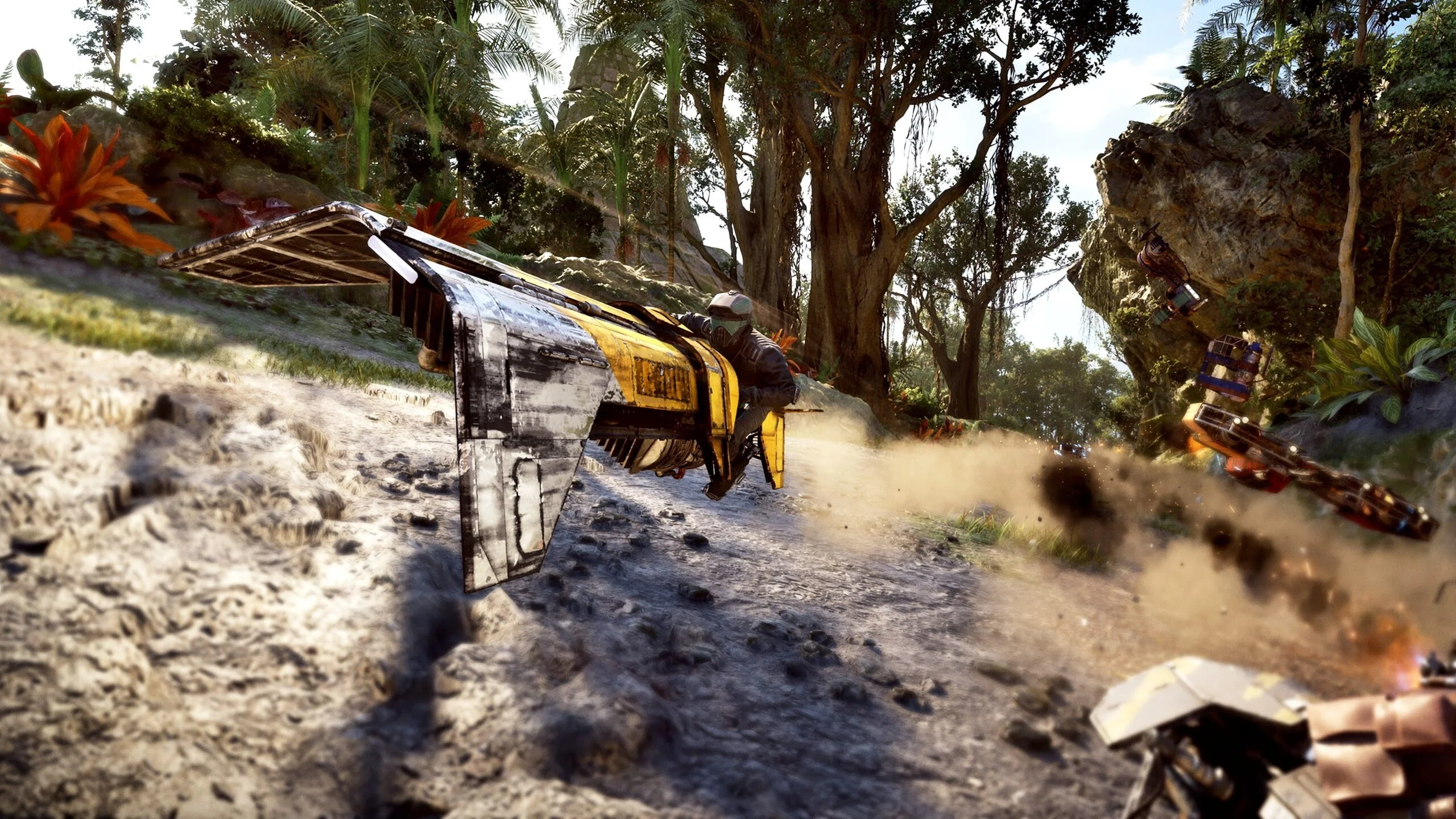
With the impending release of Star Wars: Galactic Racer on October 6, 2026, for Xbox Series X/S, PS5, and PC, developers Fuse Games are primed to revive the thrill of high-speed racing through a galaxy far, far away. This title stands as a true successor to the cherished Episode 1: Racer, showcasing enhanced visuals, varied vehicle options, and elevated stakes.
The Narrative Arc and Protagonist Shade
In this installment, players enter the Galactic League of the Outer Rim, where fierce racers come together to vie for supremacy. The narrative revolves around Darius Pax, the league's founder, who seeks to thwart Kestar Bool, the reigning champion. Enlisting the expertise of a newcomer, Shade, players embark on a journey not only to dethrone Bool but also to uncover Shade's personal quest for revenge.
Branching Campaign Mechanics
What sets Galactic Racer apart is its roguelite campaign structure. Rather than progressing linearly, players select their next event type and corresponding rewards, facilitating unique gameplay experiences on each attempt. This approach ensures a fresh feel with each playthrough while giving players opportunities to unlock new enhancements throughout the campaign.
Track Designs
Tracks play a pivotal role in any racing experience, and Galactic Racer takes this seriously. Each course is intricately designed with distinct layouts and obstacles, designed to challenge players in different ways. This meticulous hand-crafting guarantees variety, ensuring no two racing experiences are identical.
Diverse Racer Styles
Prior to each race, players will select a Racer Style for Shade from a total of 15 options, though only a few will be available initially. For instance, the Survivor style grants shields and boosts speed, while the Tenacious style allows for additional crashes. Progressing through styles requires completing specific objectives, enabling players to become stronger with each failure, which is a refreshing game mechanic.
Event Formats
During races, attendees will encounter numerous event types, ranging from standard races featuring up to 11 competitors, to specialized events. For instance, the Field Test requires players to complete a solo race within a specific time frame, while the high-stakes Eliminator event necessitates a top-three finish to avoid elimination. The campaign culminates in a Qualifier where Shade faces off against a formidable opponent.
Variety in Vehicles
Traditional podracing is only one aspect of the game—players can also pilot three other types of repulsorcraft. The Land Speeder features high durability and excellent drifting capabilities, while the Speeder Bike focuses on rapid acceleration. The new Skimspeeder, characterized by its impressive speed, boasts exceptional cornering abilities, albeit at the cost of slower acceleration, adding strategic depth to vehicle selection.
Vehicle Upgrades and Special Parts
Post-race, players can enhance their vehicles’ stats, tailoring attributes like resilience and cornering to suit their racing style. Moreover, customizing vehicle parts significantly alters performance. Options such as Afterburner Recharge and Overcharged Systems introduce new gameplay facets, allowing players to benefit even from in-race malfunctions.
Boost Mechanics: Afterburners and Ramjets
Speed enthusiasts can take advantage of both Afterburners and Ramjets to increase velocity. Afterburners offer a standard boost, while Ramjets function similarly to nitrous, providing quick bursts of speed but also generating heat that could lead to dangerous consequences. Environmental factors will affect the usability of Ramjets—strategically managing them will be vital for success.
Extensive Customization Features
The customization aspect is noteworthy; players can customize vehicles with numerous liveries and colors, resulting in a staggering range of combinations. Such variety ensures that even identical vehicles will boast unique visual aesthetics, which is crucial in multiplayer settings.
Multiplayer Experience
Beyond the single-player campaign lies the multiplayer component, where players can compete against others in exhilarating races or engage in Quick Races. The multiplayer framework integrates Contracts that offer bonus parts and Credits, alongside the chance to create rivalries with other players.
Character Selection and Abilities
In a notable twist, players can choose from various characters, including fan-favorite Sebulba from Phantom Menace. Each character presents unique starting abilities, introducing diverse strategic elements to racing and online play.
System Requirements and Performance Expectations
On the PC front, only the minimum system requirements have been published, specifying an SSD with 50 GB of space and a capable processor like Intel's Core i5-8400 or AMD's Ryzen 5 2600. High-performance graphics options are outlined, including Nvidia's RTX 2060 as a baseline. Console players are promised a fluid 4K/60 FPS performance, with particular attention given to optimizing graphics across platforms.
No Seasonal Models
Despite typical trends in the industry towards seasonal content, Galactic Racer will not implement season passes post-launch. Studio CEO Matt Webster emphasized that this is a fully contained game with a dedicated campaign and arcade modes. This commitment to a premium release model helps in distinguishing Galactic Racer from free-to-play competitors.
In conclusion, Star Wars: Galactic Racer promises a thrilling racing experience complete with engaging gameplay mechanics, extensive vehicle customization, and multifaceted multiplayer options, making it a highly anticipated title for fans of the franchise and racing enthusiasts alike.
Discussion
Sign in to join the discussion.